

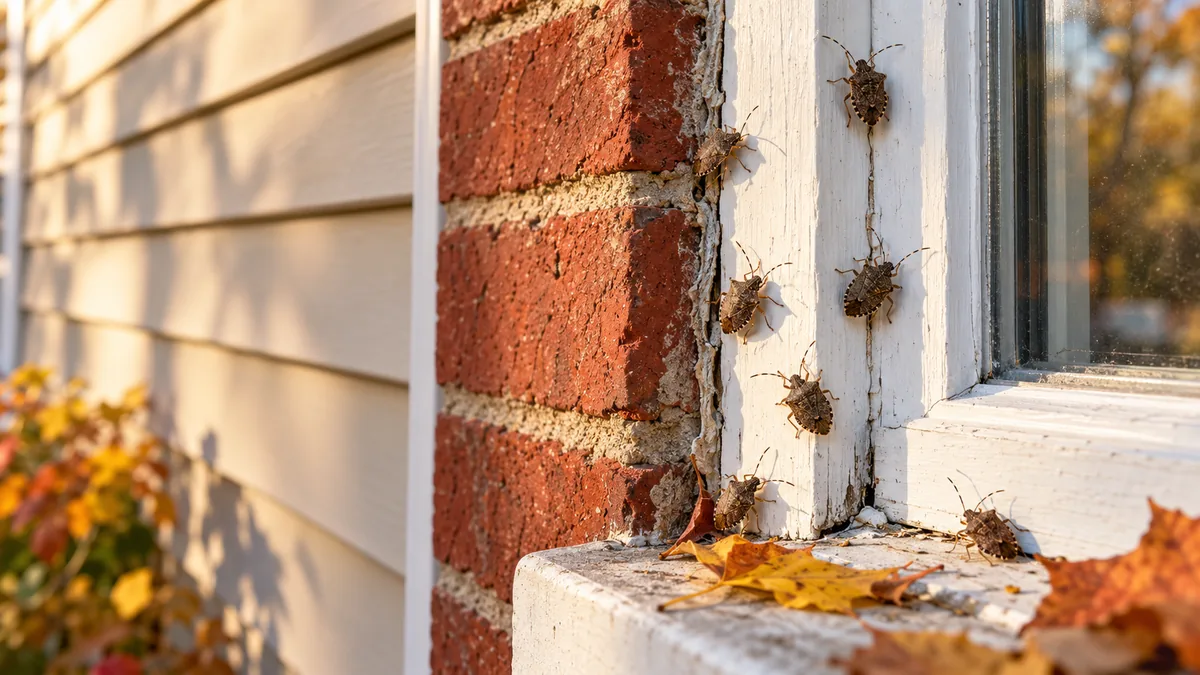
The short answer: To get rid of stink bugs that are already inside, vacuum them up or knock them into a container of soapy water, and don’t crush them. To stop more from getting in, seal the gaps around windows, doors, siding, utility lines and the chimney, and repair torn screens, ideally before late September. Skip indoor bug sprays and foggers. Penn State Extension does not recommend them, and the dead bugs they leave in your walls can attract carpet beetles.
Stink bugs are a nuisance, not a structural threat. They don’t eat wood, and they don’t breed inside your home. The problem is the sheer number of them that can pile into a Pittsburgh-area house each fall, and the smell when one gets squashed. Here’s how to deal with the ones already inside and keep the next wave out.
Why Stink Bugs End Up Inside Pittsburgh Homes
The stink bug most Western Pennsylvania homeowners see is the brown marmorated stink bug, an invasive species first found in the U.S. in Lehigh County, Pennsylvania, in 1998. As the weather cools, adults look for a protected place to spend the winter. In Pennsylvania, Penn State Extension’s brown marmorated stink bug guide puts that shelter-seeking flight in September through October.
A house works perfectly for them. They gather on warm, sunny exterior walls, then squeeze through small cracks around windows, trim, siding and utility openings into wall voids and attics. There they stay mostly inactive until warm days wake them up. That’s why you may see a few crawling on a window or lampshade in the middle of winter, and more of them in late winter and spring as they try to get back outside.
How to Get Rid of Stink Bugs That Are Already Inside
Once stink bugs are indoors, the goal is to remove them without making the house smell. These methods work best:
- Vacuum them up. A vacuum is the fastest way to remove live or dead stink bugs. The vacuum can hold onto the odor, so use a shop vac or an older vacuum if you can. Or slip a knee-high stocking into the hose and secure it with a rubber band, so the bugs collect in the stocking and you can tie it off and throw it away.
- Drop them into soapy water. Hold a cup or small bucket of water with a few squirts of dish soap under the bug and tap it in. The soap breaks the surface tension so the bug can’t climb out.
- Set a light trap in a dark room. Researchers who worked with homeowners in Virginia tested several indoor traps. Their Journal of Extension study found the most effective one was a simple aluminum foil pan of soapy water with a desk lamp shining into it. Set it up overnight in a room where you keep finding stink bugs, such as an attic, spare bedroom or sunroom.
- Find where they’re coming out. If you keep finding bugs in the same room, look for the gap they’re using: behind baseboards, around window and door trim, and around ceiling light fixtures and exhaust fans. Sealing those interior gaps with caulk stops the bugs that are already in your walls from reaching your living space.
What Not to Do
- Don’t crush them. Squashing a stink bug releases the odor it uses for defense, and it lingers on hands, fabric and surfaces. If it’s too late, here’s our guide to getting rid of the stink bug smell.
- Don’t spray insecticide or set off bug bombs indoors. Penn State Extension advises against using insecticides inside the house for stink bugs. The bugs killed inside wall voids stay there, and they can feed carpet beetles, which then move on to wool, stored dry goods and other natural products.
- Don’t count on a repellent or a single spray. Penn State notes that fall exterior insecticide sprays offer only minor relief, because sunlight breaks the product down within days to about a week. Sealing entry points does far more.
How to Keep Stink Bugs Out: An Entry-Point Checklist
Penn State Extension calls mechanical exclusion, meaning physically sealing the openings, the best way to keep stink bugs out of a home. Walk around the outside of your house on a sunny afternoon and check these spots, starting with the walls where you see the most bugs gathering:
| Where to look | What to check | How to fix it |
|---|---|---|
| Windows | Cracked or missing caulk around the frame, torn screens, gaps under window air conditioners | Re-caulk with a quality exterior caulk; repair or replace screens; remove window AC units for the season or seal around them |
| Exterior doors | Daylight under the door, worn weatherstripping | Replace door sweeps and weatherstripping |
| Siding and trim | Gaps where siding meets trim and corner boards, and under the wood fascia | Caulk small cracks; have loose siding or rotted fascia repaired |
| Utility openings | Gaps around AC lines, cable and phone wires, outdoor faucets, gas and dryer vents | Seal with caulk or expanding foam; make sure dryer vent flaps close |
| Chimney | Gaps behind or around the chimney where it meets the siding or roof | Caulk or flash the gaps; have a chimney cap and screen installed |
| Attic and roof vents | Missing or torn screening on soffit, gable and ridge vents | Replace damaged vent screens with fine mesh |
Timing matters. The best time to seal is late summer, before the fall flight starts. If you’re reading this in October with bugs already on the siding, it’s still worth doing. Every gap you close now means fewer bugs in your walls this winter and fewer in your rooms next spring.
What to Expect Season by Season
| Season | What stink bugs are doing | What to do |
|---|---|---|
| Late summer (August to early September) | Feeding outdoors on gardens, fruit and ornamental plants | Seal cracks, repair screens and replace weatherstripping before they start looking for shelter |
| Fall (September to October) | Gathering on sunny walls and squeezing into gaps to spend the winter | Keep sealing; vacuum or trap any that get inside; don’t spray indoors |
| Winter | Mostly inactive inside walls and attics; a few wander out on warm days | Vacuum strays; note the rooms where they appear and seal those interior gaps |
| Late winter to spring (through mid-May) | Waking up and moving toward light and windows as they try to leave | Use a light trap in problem rooms; finish sealing interior gaps |
When to Call a Pest Control Professional
A few stink bugs on the windows each fall are normal in Western Pennsylvania. It’s time to get help when:
- You’re finding dozens of stink bugs a day indoors, or they keep coming back in the same rooms after you’ve sealed what you can reach.
- The gaps you need to seal are high on the house, around the roofline or behind the chimney, where working from a ladder isn’t safe.
- You’re seeing other pests too, such as mice, spiders or ants, using the same openings to get in.
Spectrum Pest Control has served Pittsburgh and Western Pennsylvania homeowners for decades. A technician can inspect your home’s exterior, point out where pests are getting in, and recommend the right next step. You can learn more about our residential pest control services, or compare Spectrum’s recurring pest control plans. Each plan starts with an inspection of your home’s entry points and includes quarterly treatments. Through October 31, 2026, our Fall Special waives the initial service fee when you sign up for a pest control package.
Stink Bug FAQ
Does killing a stink bug attract more stink bugs?
No. The smell of a crushed stink bug doesn’t attract others. What draws them in is warmth, light and a way inside. We explain it in more detail in our post on whether killing a stink bug attracts more.
Will stink bugs damage my house?
No. Penn State Extension notes that stink bugs don’t reproduce inside homes or damage the structure. Some sensitive people can get skin irritation or an allergic reaction from handling them, so use a vacuum or gloves rather than bare hands.
Why do I see stink bugs inside in winter and spring?
These are bugs that got into your walls or attic in the fall. Warm days and spring temperatures wake them, and they wander toward light, often ending up on windows, lamps and ceilings. Seal the interior gaps they come out of, and they’ll stop showing up in your living space.
How long will stink bugs stay in my house?
Stink bugs that spent the winter in your walls usually leave in spring. Penn State Extension puts that emergence at about late April to mid-May. Sealing the outside of your home before next fall is what keeps the cycle from repeating.
Seeing stink bugs on your siding or windows? Call 412-532-1380 or Get a Free Quote, and a Spectrum Pest Control technician will help you find out where they’re getting in.

James Stevenson is the owner of Spectrum Pest Control, Pittsburgh’s trusted local pest control experts since 1992. With decades of experience protecting Western Pennsylvania homes and businesses from ants, bed bugs, rodents, wasps and all types of pests, James Stevenson and the Spectrum team are committed to providing fast, effective and eco-friendly pest control solutions. Spectrum Pest Control serves Pittsburgh and all of Western PA including Wexford, Cranberry Township, Butler, Saxonburg, Monroeville and Coraopolis.