

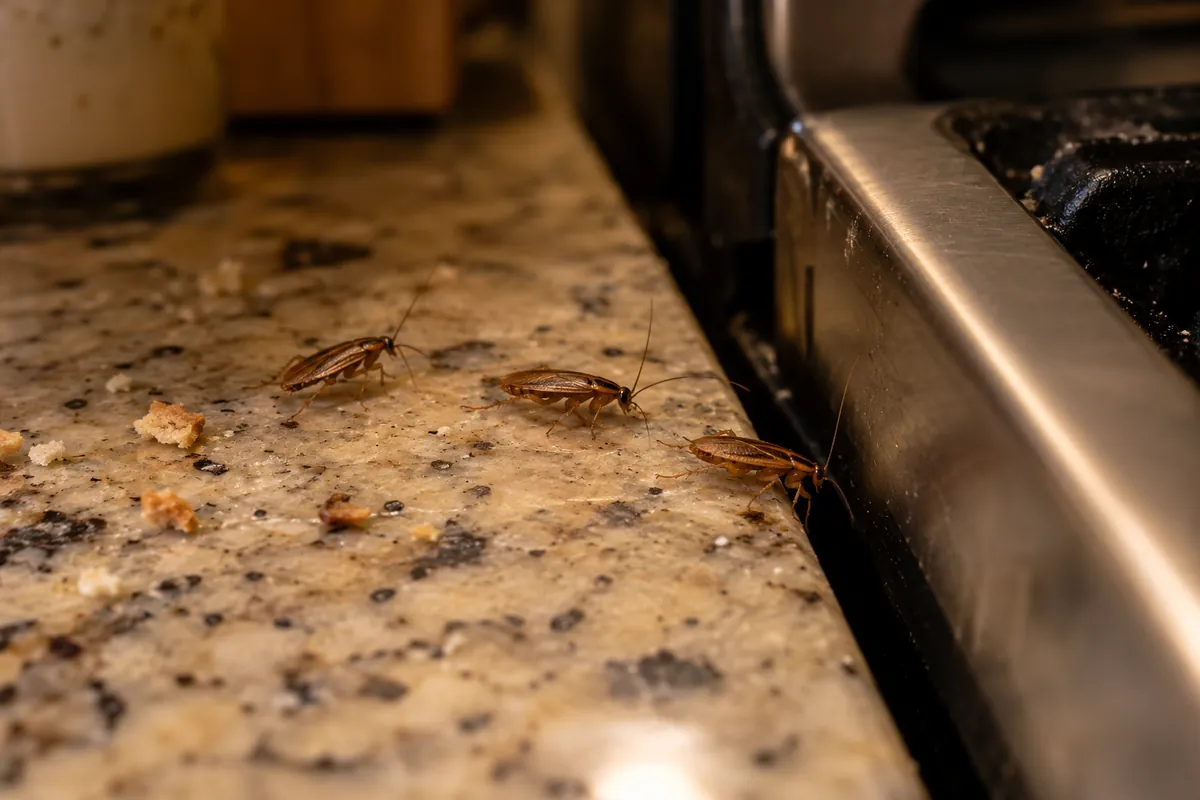
The short answer: To get rid of cockroaches, first figure out which kind you have. Small tan roaches in the kitchen or bathroom are almost always German cockroaches, and they need gel baits, strict cleanup and sealed cracks, not sprays or bug bombs. Large reddish or nearly black roaches in the basement usually come from drains, crawl spaces or outdoors, so moisture control and sealing matter most. A roach that flew to your porch light is often a Pennsylvania wood cockroach, which dies indoors on its own and needs no pesticide at all.
That difference is why so many do-it-yourself attempts fail. People treat every roach the same way, usually with a spray can or a fogger, and the problem keeps coming back. Here’s how to identify what you’re dealing with, what actually works for each type, and when it’s time to bring in a professional.
First, Figure Out Which Cockroach You Have
These are the four cockroaches you are most likely to find in a Western Pennsylvania home. Catch one on a sticky trap or in a clear jar and compare it with this table:
| Cockroach | What it looks like | Where you’ll find it | What it usually means |
|---|---|---|---|
| German cockroach | Small (about 1/2 to 5/8 inch), tan to light brown, with two dark stripes behind the head | Kitchens and bathrooms: under sinks, behind the stove, fridge and dishwasher, inside cabinets | An indoor infestation that is breeding in your home |
| American cockroach | Large (about 1 1/2 inches), reddish brown with a pale yellow edge behind the head | Basements, crawl spaces, floor drains, boiler and steam-heat areas | Roaches coming up from damp areas or sewers, or carried in |
| Oriental cockroach | About 1 inch, very dark brown to nearly black, often looks oily | Damp, cool spots: basements, crawl spaces, drains, under porches | Moisture problems and gaps around plumbing or doors |
| Pennsylvania wood cockroach | Brown, up to about 1 inch; males have long wings and fly | Near doors and windows, often after a porch light was on, or on firewood brought inside | A stray from the woods or leaf litter, not an infestation |
If you only ever see a single winged roach near an entry door in the warm months, and you live near trees, it is very likely a wood cockroach. If you see small roaches in the kitchen, especially during the day, assume German cockroaches and act quickly. Penn State Extension’s German cockroach guide notes that a single egg capsule holds up to 48 eggs, so a few roaches can turn into hundreds in a matter of months.
How to Get Rid of German Cockroaches Inside Your Home
German cockroaches live their whole lives indoors, so the fix happens inside. Work through these steps in order:
- Take away food and water. Wipe up crumbs and grease, don’t leave dirty dishes in the sink overnight, store cereal, flour and pet food in airtight containers, and take the trash out every night in a can with a tight lid. Fix dripping faucets and leaks under sinks. Roaches can survive a while without food, but water and crumbs keep a colony growing.
- Use gel baits where roaches hide. Place small dabs or bait stations in the places roaches rest: hinge sides of cabinet doors, under the sink, behind and beside the stove and refrigerator, and near the dishwasher. Roaches eat the bait and return to their hiding spots, which is where you want the insecticide to reach. Penn State lists baits with hydramethylnon, fipronil, sulfluramid, boric acid or abamectin as effective. Always follow the label and keep baits away from children and pets.
- Keep the bait clean. Don’t spray insecticide or cleaning products on or right next to bait placements. Roaches are less likely to eat contaminated bait. Clean the surrounding surfaces, but leave the bait itself alone.
- Seal cracks and gaps. Caulk gaps around pipes under sinks, along baseboards and backsplashes, and where cabinets meet the wall. This removes hiding places and slows roaches moving between rooms or between apartments.
- Cut the clutter. Cardboard boxes, paper bags and stacks of newspaper give roaches more places to hide and breed. Recycle them, especially in the kitchen, and check grocery bags and secondhand appliances before bringing them in.
- Replace bait and keep checking. Refill baits when they’re eaten, and use sticky traps (see below) to confirm the numbers are dropping. Expect it to take several weeks, because eggs that were already laid keep hatching after the adults die.
If you rent, tell your landlord or property manager as soon as you see German cockroaches. They move between units through shared walls and plumbing, so treating one apartment alone often doesn’t solve the problem.
Why Bug Bombs and Sprays Usually Fail
It’s tempting to set off a fogger and leave the house for a few hours. The research says not to bother. In a field study in infested apartments, North Carolina State University researchers found that bug bombs did nothing to reduce cockroach populations, while similarly priced gel baits wiped out the roaches in those homes within two to four weeks. The fogger insecticide settled on floors and countertops instead of reaching the cracks, cabinet interiors and undersides of surfaces where roaches hide. Pesticide residue on those surfaces jumped roughly 600-fold right after the foggers were used.
Penn State Extension reaches the same conclusion: residual sprays and aerosol foggers are of little value against German cockroaches and may scatter them, which spreads the infestation to new rooms and makes control take longer. Rutgers Cooperative Extension’s German cockroach fact sheet adds that liquid sprays are less effective than bait because of insecticide resistance and repellency.
There’s a health angle, too. The EPA lists cockroaches as an asthma trigger, because proteins in their droppings, saliva and body parts can set off allergies and asthma symptoms. Filling your kitchen with pesticide residue doesn’t help anyone breathe easier. Removing the roaches and cleaning up after them does.
How to Handle American, Oriental and Wood Cockroaches
The bigger roaches are a different problem with a different fix:
- American cockroaches usually come from basements, crawl spaces, floor drains and sewer connections. Keep floor drains filled with water or covered, fix leaks, reduce humidity with a dehumidifier, and seal gaps around pipes and utility lines. Baits and light applications of insecticidal dust in voids, used according to the label, help indoors.
- Oriental cockroaches like dark, damp and cool areas and often enter along plumbing or under doors. Fix moisture problems, install door sweeps, clear leaf litter and mulch away from the foundation, and seal around pipes where they enter the house. Penn State notes that they may move indoors during dry spells as they look for humidity.
- Pennsylvania wood cockroaches don’t need pesticides inside. Penn State Extension’s wood cockroach page explains that they dry out and die within a few days indoors and don’t feed or reproduce inside homes. Just remove the stray, keep firewood outside until you burn it, move woodpiles and debris away from the house, add door sweeps, seal gaps around doors and windows, and turn off porch lights at night.
Monitor With Sticky Traps So You Know It’s Working
Sticky traps won’t get rid of an infestation on their own, but they tell you where roaches are and whether your treatment is working. Penn State recommends placing traps against walls and in corners, and notes that about a week of trapping at ten or more spots usually shows where the problem is concentrated.
| Where to place traps | What it tells you |
|---|---|
| Under the kitchen sink and behind the trash can | Whether roaches are using plumbing and food waste |
| Behind or beside the stove and refrigerator | Where the main harborage is, since these spots stay warm |
| Inside lower cabinets and the pantry | Whether roaches are reaching stored food |
| Bathroom vanity and behind the toilet | Whether the infestation has spread beyond the kitchen |
| Basement near floor drains and the water heater | Whether you’re dealing with larger roaches coming from below |
Write the date on each trap and count the catch every week. Small roaches (nymphs) on the traps mean they are breeding indoors. Falling counts mean your plan is working. Steady or rising counts after three or four weeks mean it’s time for professional help.
When to Call a Cockroach Exterminator
A single wood cockroach by the back door is no cause for alarm. Call a professional when:
- You’re seeing German cockroaches in the kitchen or bathroom, especially during the day or in more than one room.
- Your sticky traps are catching small roaches week after week, or counts aren’t falling after a month of baiting and cleanup.
- Roaches keep coming up from basement drains or crawl spaces after you’ve fixed the moisture you can reach.
- Someone in your home has asthma or allergies and you want the roaches gone quickly without filling the house with spray.
- You live in an apartment or a duplex and roaches seem to be coming from next door.
Spectrum Pest Control provides professional cockroach extermination in Pittsburgh and surrounding Western Pennsylvania communities. A technician inspects your home to find where the roaches are hiding and how bad the problem is, treats them at the source, and gives you recommendations to keep them from coming back. Cockroaches are on our same-day pest control service list: call before noon, and we’ll schedule a same-day appointment. For ongoing protection, roaches are covered under all three of our Ultimate Care plans.
Cockroach FAQ
Does seeing one cockroach mean I have an infestation?
Not always. A large roach in the basement or a winged roach near the door in summer may be a stray, and a Pennsylvania wood cockroach won’t survive indoors. A small tan German cockroach in the kitchen is different: they breed indoors, so where there’s one, there are usually more hiding nearby. Put out sticky traps for a week to find out.
Are cockroaches dangerous?
They can be a health problem. Penn State Extension notes that German cockroaches can spread germs that cause food poisoning and other stomach illnesses, and their droppings and shed skins contain allergens. The EPA lists cockroaches as a common asthma trigger, which matters most for children and anyone with asthma.
Can I get rid of German cockroaches myself?
A small, recently started problem can sometimes be handled with gel baits, careful cleaning and sealing, checked with sticky traps. Larger infestations, roaches in several rooms, or roaches coming from a neighboring unit are much harder to clear without professional treatment and follow-up.
How long does it take to get rid of cockroaches?
With baits placed correctly and food and water removed, German cockroach numbers usually drop within a few weeks. Because eggs keep hatching after the adults die, follow-up matters. Rutgers recommends repeating treatment every two to four weeks until no cockroaches are found over a four-week period.
Seeing cockroaches in your home? Call 412-532-1380 or Get a Free Quote, and a Spectrum Pest Control technician will find out what kind of roach you have and how to get rid of it.

James Stevenson is the owner of Spectrum Pest Control, Pittsburgh’s trusted local pest control experts since 1992. With decades of experience protecting Western Pennsylvania homes and businesses from ants, bed bugs, rodents, wasps and all types of pests, James Stevenson and the Spectrum team are committed to providing fast, effective and eco-friendly pest control solutions. Spectrum Pest Control serves Pittsburgh and all of Western PA including Wexford, Cranberry Township, Butler, Saxonburg, Monroeville and Coraopolis.