

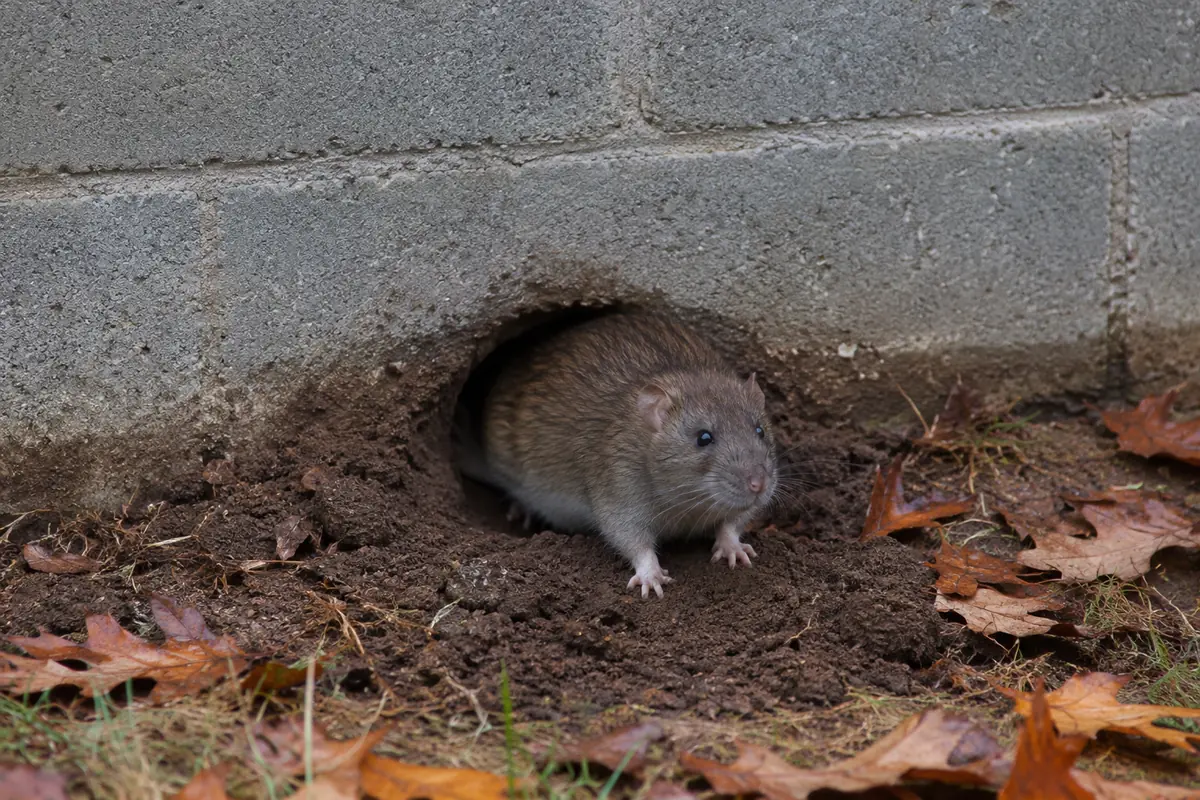
The short answer: If you see holes about 2 to 4 inches wide along your foundation, fence, shed or deck, with fresh dirt fanned out in front and dark droppings nearby, you probably have rats in your yard. Rats move in because the yard feeds and hides them: garbage, pet food, bird seed, dog waste, woodpiles and clutter. Remove those first, then control the rats with anchored bait stations or careful burrow baiting, and seal the gaps that lead into your house. If rats keep coming back, show up in daylight or get into the basement, it is time for a professional.
Rats in the yard rarely stay in the yard. They travel along fences and walls looking for food and warmth, and the same holes under your porch can lead to gaps in an old stone foundation or a cracked sewer line. Pittsburgh ranked No. 20 on Orkin’s 2026 Rattiest Cities list, so this is a common problem here, not a sign that you did something wrong. Here’s how to read the signs, what actually works, and where local help fits in.
Signs You Have Rats in Your Yard
The rats you find outdoors around Pittsburgh homes are almost always Norway rats, also called brown rats or sewer rats. They are heavy-bodied, brown-gray rodents with a blunt nose, small ears and a tail shorter than the body. They dig burrows and live at or below ground level, and they are active all year, mostly at night.
Because they come out after dark, you will usually see what they leave behind before you see a rat. The Allegheny County Health Department lists the same signs its inspectors look for:
- Burrow holes along foundations, under slabs, sheds, decks and porches, beside fences and in overgrown corners.
- Runways: narrow, flattened paths in the grass or soil, usually running along a wall or fence line.
- Rub marks: dark, greasy smears where rats squeeze past the same edge of a wall, step or fence post again and again.
- Droppings: dark, capsule-shaped pellets, much larger than mouse droppings. Fresh ones look wet and soft.
- Gnaw marks on garbage cans, compost bins, wooden steps, shed doors and garden hoses.
- Food disappearing: chewed garbage bags, bird seed cleared from under the feeder overnight, or pet food going missing.
How often you see rats tells you something too. A few rats usually leave only a burrow or two. If you see rats in daylight, the population is usually large enough that some are being pushed out to feed when people are around.
How to Tell if a Rat Burrow Is Active
A typical rat burrow entrance is about 2 to 4 inches across. The county describes a typical burrow as 2.5 to 3 inches in diameter, 6 to 8 feet long and only 6 to 8 inches deep, often with one or more escape holes nearby. Late fall is a good time to look: once leaves and garden plants die back, holes along the foundation and fence are much easier to spot.
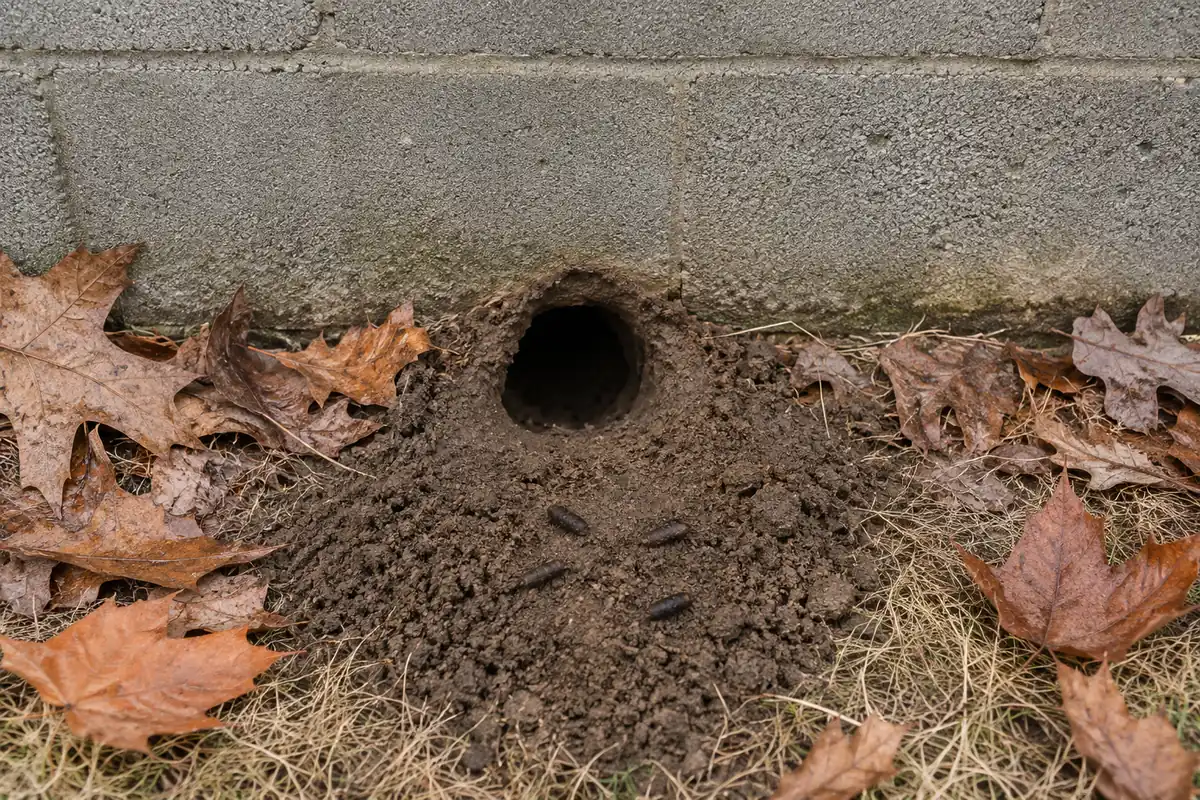
An active burrow usually has:
- Fresh soil fanned out in front of the opening (the “kick-out”).
- A smooth, packed entrance with no leaves, cobwebs or debris inside.
- Droppings or a worn path leading to it.
To be sure, use the plug test recommended by the Washington Department of Fish and Wildlife: loosely fill the opening with crumpled newspaper or a little soil and check it the next day or two. If it has been pushed open or cleared, rats are using it. Do this before you treat anything, because it tells you which holes matter and later shows whether your control is working.
What Draws Rats to a Pittsburgh Yard
Rats need food, water and shelter. Water is everywhere in Western Pennsylvania, between rain, creeks and storm drains, so the two things you can control are food and hiding places. The Allegheny County Health Department’s Resident’s Guide to Rodent Control says about 80 percent of a rat’s diet is garbage. These are the usual culprits:
| What’s in the yard | Why rats like it | What to do |
|---|---|---|
| Garbage bags and open cans | Steady food every night | Use sturdy cans with tight lids; don’t leave bags outside, on a porch or in the garage overnight |
| Pet food and dog waste | Easy food, especially near a doghouse | Pick up bowls within an hour of feeding and clean up pet waste daily |
| Bird feeders | Spilled seed on the ground | Clean under the feeder weekly; stop feeding birds until the rats are gone |
| Compost and gardens | Food scraps and fallen fruit or vegetables | Keep food scraps out of open piles; pick up fallen produce |
| Lumber, firewood and clutter | Dry, protected nesting spots | Stack wood 12 to 18 inches off the ground; remove old furniture, appliances and junk |
| Thick shrubs and ivy against the house | Cover along the foundation | Keep a clear strip along the walls so burrows and runways have nowhere to hide |
A dog or cat won’t solve the problem. The county notes that pets rarely control rats, and rats often live under doghouses, eating the dog’s food and waste when it is asleep.
How Rats Get From the Yard Into Your House
Once rats are living next to your foundation, the house is only a few feet away. They come inside looking for food and warmth, and the colder months give them every reason to try. There are two main routes.
Gaps in the building. According to the county, rats can get through openings of half an inch or more. Common entry points around Pittsburgh-area homes include:
- Gaps under exterior and garage doors without a tight sweep
- Loose or broken basement windows
- Cracks and holes in stone or block foundations, especially where water, gas and sewer pipes come through
- Gaps around porches, steps and decks that lead under the house
The sewer line. Many older Pittsburgh neighborhoods still have brick and terra cotta sewer pipes. The health department’s guide on how rats enter homes from sewers explains that rats find breaks in those old lines, tunnel up to the surface, and can get into a home through an uncovered basement floor drain, a broken lateral line or even a toilet. Burrows in the yard near where the sewer line runs, or rats showing up near a basement drain, are clues. A plumber can check the line with a sewer camera, and repairing the house line is the homeowner’s responsibility.
What to Do About Rats in Your Yard, Step by Step
Rat control works best in this order. Skipping the first step is the most common reason rats come right back.
- Take away food and shelter first. Fix the garbage, pet food, bird seed and clutter problems in the table above. As long as the yard keeps feeding them, new rats will replace the ones you remove.
- Mark the active burrows. Use the plug test so you know where the rats are living and can check your progress.
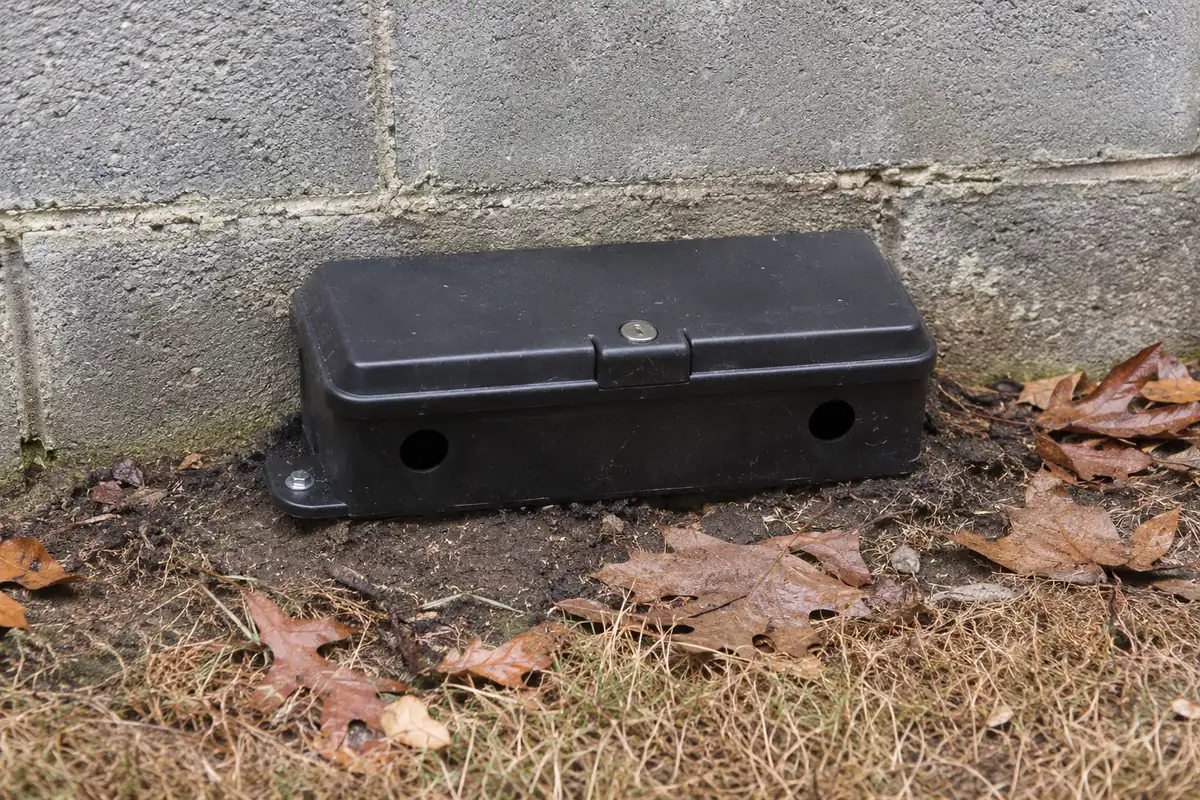
- Use tamper-resistant bait stations, not loose bait in the open. The county calls anchored, tamper-proof bait stations the safest way to use rat bait in a yard. Place them along the paths rats already travel, against building walls and fence lines, and stake or wire them down so animals can’t drag them off. Rat bait is very poisonous to pets and small children, so read and follow the label every time.
- If you bait burrows, do it carefully. Never push a bait packet into a hole: rats can kick it back out where children, pets or wildlife can reach it. The county recommends putting a small amount of loose or pellet bait deep in the burrow with a long-handled spoon or funnel, and keeping fresh bait available until feeding stops.
- Use snap traps indoors. Inside the house, traps are better than poison because you can remove the rat before an odor develops. Rats avoid new objects, so set baited traps unset for a few days, then set them once the bait is being taken. Place them along walls where rats travel.
- Skip the gadgets. Ultrasonic devices and repellents have not been shown to drive out an established rat population.
- Seal last. Once the plug test shows burrows are no longer reopened, fill them in, then close entry points into the house with metal flashing, hardware cloth or sheet metal, and cement or mortar for foundation cracks. Add door sweeps and fix basement windows.
- Clean up safely. Follow the CDC’s rodent cleanup steps: air the area out for 30 minutes, wear rubber or plastic gloves, soak droppings and nesting material with a disinfectant or a fresh mix of 1.5 cups of bleach per gallon of water for 5 minutes, then wipe it up. Don’t sweep or vacuum droppings.
If the rats keep returning after you have done all of this, the source may be next door: a neighbor’s garbage, an empty house or a broken sewer line. Rat problems are often shared by a whole block.
Local Rules and Help in Allegheny County and Pittsburgh
A few local rules are worth knowing before you start:
- Rats can fail a property inspection. When the Allegheny County Health Department gets a complaint, it can inspect the property. Burrows, droppings, gnaw marks, runways and excess garbage or pet waste are all signs that fail an inspection, and repeated failures can lead to a notice of violation, a court appearance or fines. You can reach the department’s Housing and Community Environment Program at 412-350-4046.
- Who may apply rat bait. If you live in your own home without tenants, state law lets you buy and place rodent bait on your property. Owners of commercial properties and rental buildings with four or more units must hire a commercial pest control company, and landlords can’t apply pesticides in rental units unless they are certified applicators.
- City of Pittsburgh residents can request a free bait station. Through the city’s Rodent Baiting Program, owners or residents can call 311 to have a contractor place one pet-safe bait station on their property, free up to twice a year. It can take several weeks to place, and it doesn’t cover businesses or apartment buildings with more than four units. Suburban municipalities run their own programs, if any.
These programs help with a light problem. A large population, rats inside the house or a sewer-related problem usually needs more than one bait station.
When to Call a Rat Exterminator
Call a professional if any of these are true:
- You see rats during the day, or several at once.
- Burrows reopen after you fill them, or new ones appear.
- You hear scratching in walls, ceilings or the basement, or find droppings indoors.
- Rats seem to be coming from a drain, the sewer line or a neighbor’s property.
- You have children or pets and don’t want to handle rat bait yourself.
- You own a rental building with four or more units, where the law requires a commercial company.
Spectrum Pest Control’s rodent control in Pittsburgh starts with a full inspection to find how rats are getting in, then uses bait stations at strategic points and ongoing exclusion to keep them out. If you call before noon, same-day service is available, and our phone lines are open 24 hours a day. If you aren’t completely satisfied, our money-back guarantee has you covered. For year-round protection, our Ultimate Care Plus and Ultimate Care Complete plans add rodents to recurring service: Plus covers rodents or mosquitoes and ticks, and Complete covers both.
Rats in the Yard FAQ
Do rats in the yard mean rats in the house?
Not always, but they are close. Rats nesting along your foundation will try gaps under doors, basement windows and pipe openings, especially in cold weather. Check the basement and garage for droppings and gnaw marks, and seal any opening of half an inch or more.
Do rats go away in winter?
No. Norway rats don’t hibernate. They stay active all year, mostly at night, and cold weather pushes them toward the warmth of basements, garages and sewers.
How can I tell rats from mice?
Size is the quickest clue. Adult Norway rats are 7 to 9.5 inches long without the tail, while house mice are small enough to fit through much smaller gaps. Rats dig burrows outdoors; mice usually nest inside walls, cabinets and stored boxes. If what you’re seeing sounds more like mice, these signs of mice in your home will help you check.
Is rat poison safe to use around pets?
Rat bait is very poisonous to pets and small children. If you use it, keep it in anchored, tamper-resistant bait stations, never in the open, and follow the label exactly. If that isn’t practical in your yard, have a professional handle it.

James Stevenson is the owner of Spectrum Pest Control, Pittsburgh’s trusted local pest control experts since 1992. With decades of experience protecting Western Pennsylvania homes and businesses from ants, bed bugs, rodents, wasps and all types of pests, James Stevenson and the Spectrum team are committed to providing fast, effective and eco-friendly pest control solutions. Spectrum Pest Control serves Pittsburgh and all of Western PA including Wexford, Cranberry Township, Butler, Saxonburg, Monroeville and Coraopolis.